
Table of Contents
- HVAC missed call management: why speed decides the job
- HVAC call-back script that turns voicemail into a booked visit
- HVAC service request prioritization: triage before you drive
- HVAC after-hours call answering without hiring a night desk
- Frequently Asked Questions
Last Updated: November 4, 2026
HVAC missed call management: why speed decides the job
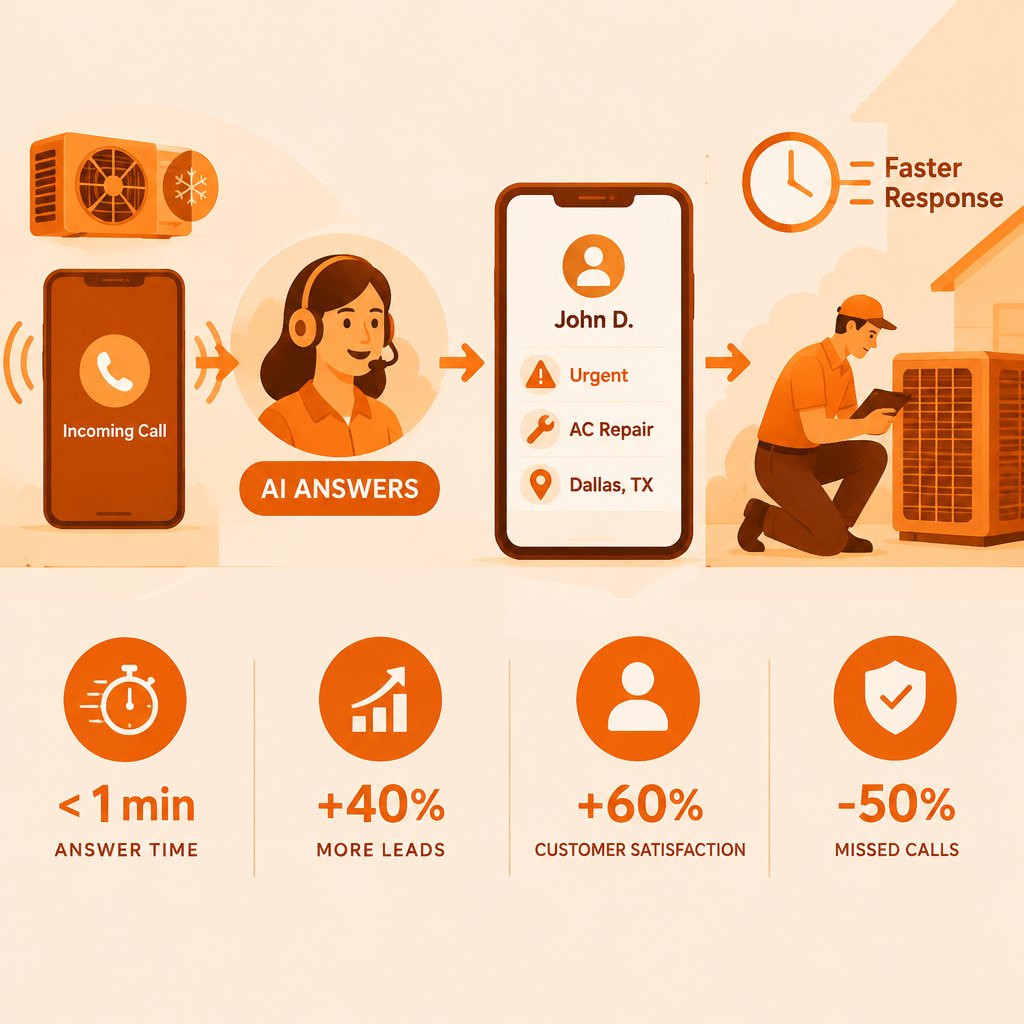
When a furnace dies in January, the homeowner does not leave a voicemail and wait. They call the next name on the list. Learning how to improve HVAC customer response times starts with accepting that the first contractor to pick up usually wins the job.
Here is the fix most guides skip: you do not need to answer every call live. You need to capture every caller before they dial your competitor.
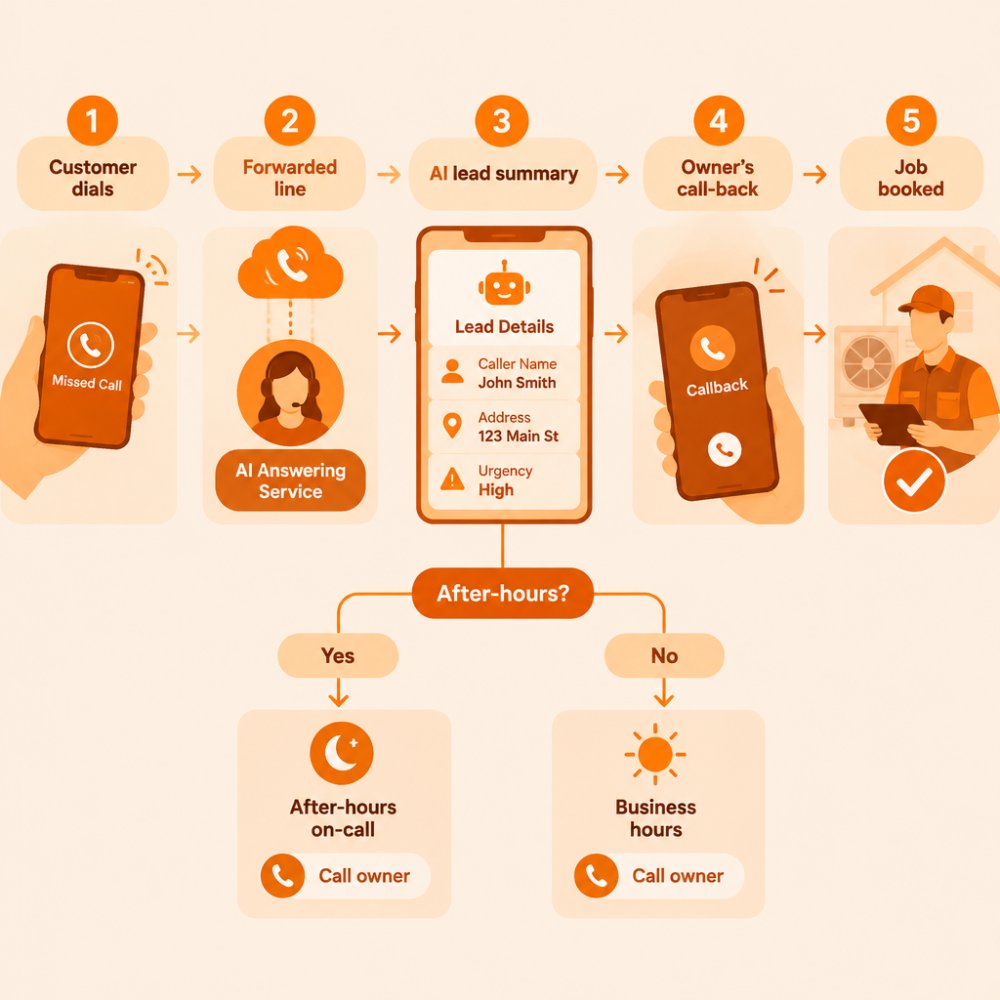
HVAC missed call management is the practice of catching every inbound call, including the ones you cannot answer, and turning each into a lead you can call back. The workflow is simple:
- You keep your existing phone number.
- Unanswered calls forward to CallGrabbr.
- The system collects the caller's name, address, and job details.
- You get a lead summary by text or email in seconds.
That summary is a captured lead, not a booked appointment. You still make the call. But now you are calling a warm lead instead of losing a cold one.
For a step-by-step walkthrough, see how to capture missed HVAC calls. For the trade-specific version, stop losing HVAC jobs to missed calls covers the full picture.
HVAC call-back script that turns voicemail into a booked visit
Most call-backs fail in the first ten seconds. The owner says "Sorry I missed you, what did you need?" and the customer, already annoyed, says "I already called someone else." The script below fixes that.
Call within five minutes if you can. Open with the apology and the reason, then move straight to booking:
"Hi, this is [Name] with [Company]. I saw you called about your [system issue]. Sorry I missed you, I was on a roof. Can I get your address and a good time tomorrow?"
Then confirm three things before you hang up:
- The address and gate code.
- Whether it is heat, cooling, or both.
- The best arrival window for them.
Keep it under two minutes. Book the visit, do not diagnose over the phone.
Set separate targets by channel
Treating every inquiry the same hides where you are slow. Define a first-response target for each channel:
- Phone: answer live during business hours; if you cannot, the missed-call workflow should text the caller within a minute or two.
- Web form: acknowledge by text or email the same business day, ideally within an hour during peak season.
- Email: reply within one business day.
- Text and social messages: respond within the same business day.
These are working targets, not industry standards. Pick numbers you can hit, then tighten them as you hire or add automation.
Define what "response time" means
A single number hides the real bottleneck. Track four separate clocks:
- First response, time from the customer's first contact to your first real reply (not an auto-reply).
- Time to booking, time from first contact to a confirmed appointment.
- Dispatch time, time from booking to the job being assigned to a technician.
- Arrival window accuracy, how often the tech arrives inside the promised window.
A shop can have a fast first response and still lose the job because booking drags. Measuring each clock separately shows you which handoff to fix.
Baseline before you change anything
Pick one week and log every inbound inquiry by channel, first-response time, and whether it became a booking. Use the results as a baseline, then re-measure after you change your process. Compare bookings per inquiry, not raw call volume.
Watch out: do not assume every missed call would have become a paying job. Track the ones that actually booked so your numbers stay honest.
For the setup that feeds this process, see how to capture missed HVAC calls.
Treating every inquiry the same hides where you are slow, so set a first-response target for each channel.
| Channel | First-response target |
|---|---|
| Phone | Answer live during business hours; missed-call workflow texts caller within a minute or two |
| Web form | Acknowledge by text or email same business day, ideally within an hour in peak season |
| Reply within one business day | |
| Text and social messages | Respond within the same business day |
HVAC service request prioritization: triage before you drive
Not every call deserves the same speed. HVAC service request prioritization means sorting leads by urgency before you plan your route.
Use three buckets:
- Emergency: no heat in freezing weather, no cooling in a heat wave, gas smell, water leaking from the unit. Call back first.
- Same-day: system running but not keeping up, strange noises, weak airflow. Fit into today's route if possible.
- Scheduled: maintenance, quotes, filter changes. Book for the next open slot.
Watch out: triaging by gut alone loses money. A "maintenance" call from a commercial account can outrank a residential emergency. Ask two questions on every call-back: how urgent is it, and is this a business or a home?
HVAC after-hours call answering without hiring a night desk
A night desk costs real money and sits idle most of the evening. For a one-truck or two-truck shop, that math rarely works. HVAC after-hours call answering can be handled without staff if you decide in advance what wakes you up and what waits until morning.
Separate true emergencies from routine requests
Write the criteria down so you and any on-call tech apply the same rule:
- Wake someone up: no heat when outdoor temperatures are at or below freezing, no cooling during a heat wave, gas smell, carbon monoxide alarm, water actively leaking from the unit, or a system that has failed for a vulnerable occupant (elderly, infant, medical equipment).
- Text back tonight, book first thing: system running but not keeping up, strange noises, weak airflow, thermostat issues.
- Next business day: maintenance requests, quotes, filter changes, and scheduling questions.
Post this list where the on-call tech can see it. Ambiguity causes either missed emergencies or burned-out techs.
Route after-hours calls without a live desk
You have three practical options:
- Forward to an on-call cell and let the tech triage live. Simple, but the tech answers every call.
- Use a live answering service that follows your script and escalates only emergencies. More coverage, but you pay per call or per month and quality varies.
- Use missed-call capture so the caller's name, address, and issue are collected and sent to you by text or email. You decide what to act on tonight.
CallGrabbr fits the third option: it captures the after-hours caller's details and texts them to you, and you choose what wakes you up. It captures the lead; it does not book the appointment or dispatch a tech.
Set expectations with the caller
A caller who hears nothing assumes you are closed. A short automatic text, "Thanks for calling [Company]. We received your message and will call you first thing in the morning. If this is a gas leak or no-heat emergency, reply URGENT", keeps the lead warm and gives you a second urgency signal.
Watch out: an after-hours auto-reply is not a first response. If the customer replies URGENT and no one acts, you have made the problem worse.
For a full comparison, read the best answering service for HVAC buyer's guide, and check answering service pricing to weigh cost against a night desk. For the complete process, see how to handle after-hours calls.
Frequently Asked Questions
How fast should an HVAC company respond to a service inquiry?
Aim to answer live calls within a few rings and return missed calls the same business day, sooner for no-cool or no-heat situations. The practical target is to make first contact before the caller dials your competitor. That means every missed call should trigger an immediate text or call-back, not a voicemail that sits until the end of the day. Track your actual first-response time for a week to see where the gaps are.
What should an HVAC receptionist say when returning a missed call?
Open with your company name and the reason for the call, then confirm the customer's address and the problem in one or two questions. A workable script: 'This is [name] with [company] returning your call about your AC. Can you confirm the service address and tell me whether the system is running at all?' That gives you enough to prioritize the request and set an arrival window. Avoid asking the caller to repeat everything they already told voicemail.
How can a small HVAC shop handle after-hours calls without a live receptionist?
Route unanswered calls to a service that answers, captures the caller's name, address, equipment type, and urgency, and sends you a summary by text. You keep your existing number and decide which calls to return first. This captures the lead without promising a same-night repair. For true emergencies, set a clear triage rule so you know which calls to return immediately and which can wait until morning.
The calls you miss tonight are tomorrow's competitor jobs. CallGrabbr catches them, texts you the details, and lets you decide who to call first. Start the 14-day trial and see how many jobs you were quietly losing.
